

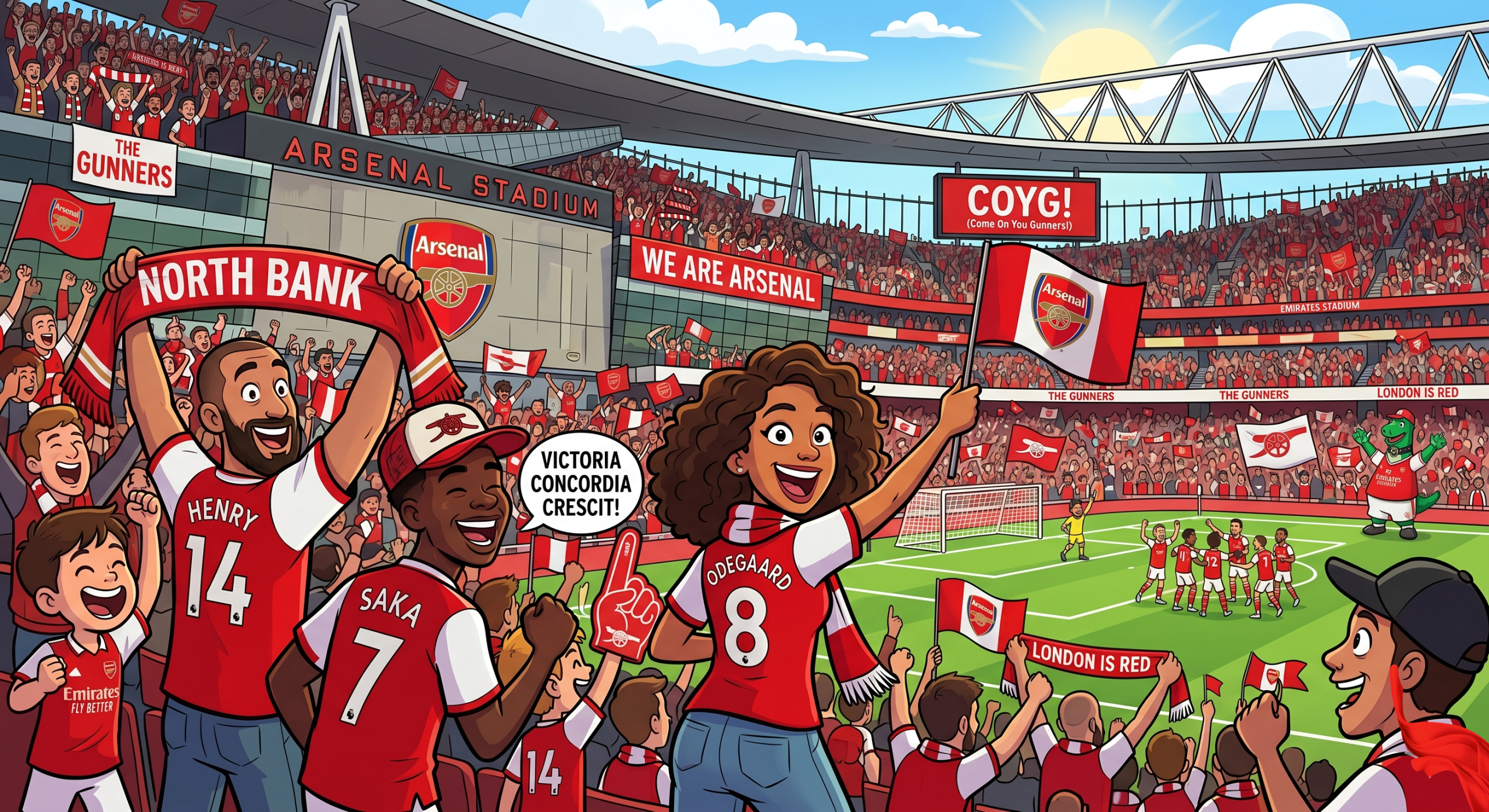
Arsenal! Arsenal! Arsenal! and North London Forever! is all over social media and this is like a fairy tale story for us Arsenal supporters. As much as this is a story of perseverance, patience and determination, it is also more a story of recruitment and perfect timing, where preparation meets opportunity.
Arsenal are Premier League champions for the first time in 22 years. The Emirates is alive again. And for those of us who follow the beautiful game closely, this is not just a football story. This is one of the most compelling leadership and organisational transformation stories of our generation.
Let me walk you through the lessons.
…From invincibility to uncertainty, a club can outlive its triumphs—but only by choosing whether to cling to its past or rebuild its future.
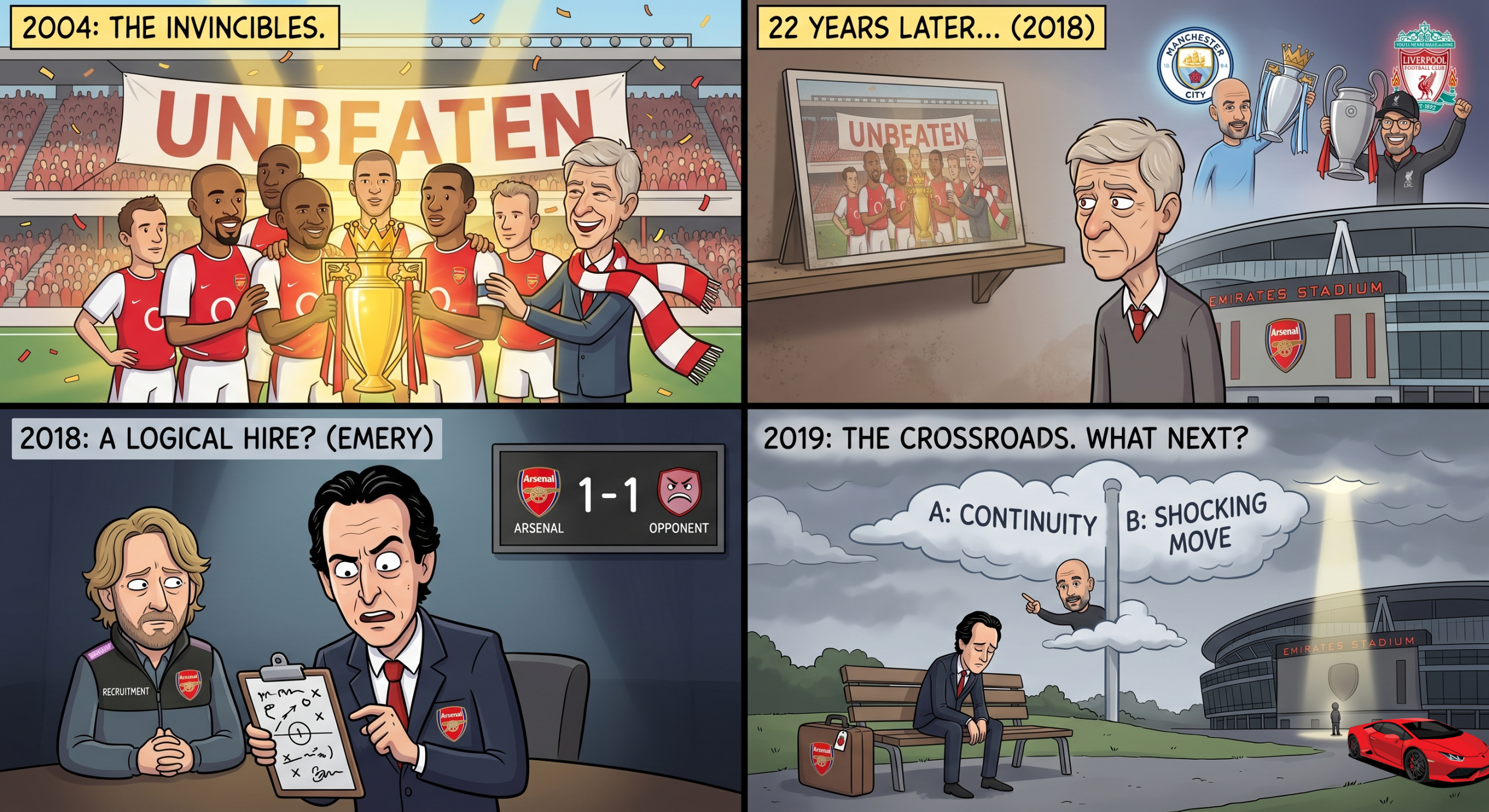
Arsenal’s last league title came in 2004, courtesy of the legendary “Invincibles,” an Arsène Wenger side that went an entire season unbeaten. For 22 years, they lived off that legacy while the world moved on.
After Wenger’s departure in 2018, Arsenal made what appeared to be a logical hire: Unai Emery, an experienced and decorated manager. But results didn’t follow, and Arsenal sacked him after just one season as director of football. They found themselves at a crossroads.
What they did next shocked the football world.
Lesson 1: When Senior Leaders Leave, Look Inside First.
Arsenal didn’t go hunting for the biggest name available. They decided to go for an inexperienced, unproven candidate in Mikel Arteta, whose only senior coaching experience was as Pep Guardiola’s assistant at Manchester City.
The entire football establishment thought it was a bold move, bordering on reckless. And yet, there must have been a reason the Arsenal Board opted for him.
The reason? Arteta had something no external hire could bring: intimate knowledge of the club, its identity, its culture, and a burning vision for where it needed to go.
The Lesson for Leaders: When a senior leader departs, your first instinct may be to recruit from outside and bring in fresh eyes and new energy. But organisations often underestimate the power of internal candidates who already understand the culture, carry institutional trust, and are deeply invested in the mission. Your next transformational leader may already be in the building. When senior leaders leave, you might benefit from recruiting from the internal pool first.

Lesson 2: Diagnosis Before Prescription and the Power of Buy-In.
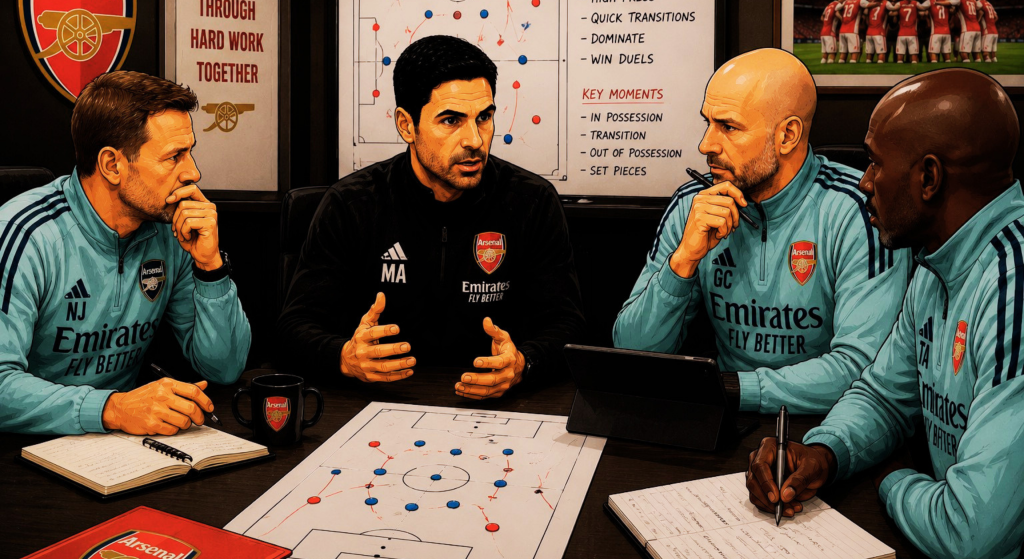
When Arteta walked into Arsenal in December 2019, he didn’t immediately launch a tactical revolution. His first priority was understanding the human landscape.
He gathered the staff and players and told them plainly what he thought, what wasn’t working, and why. He sought to understand how the people inside the organisation felt about the club. Was there pride? Was there belief? Was there accountability?
What he found was a club adrift. Half the stadium was empty at matches. The fanbase was disconnected. The dressing room lacked identity. In his own words: “That image, that feeling of the stadium, the crowd. Fifty percent of the stadium was empty. It really got into me. I said, with this, there is no project. This is not going to work.”
But rather than imposing change from the top down, he built a picture of the current reality versus where he wanted to take the organisation, and then brought everyone along on the journey. He told the squad: “We have to get back together with the same agenda and the same intentions. The foundations have to be really strong in order to create something.”
He used rituals to build emotional connection. He invited a club photographer of 30 years to address the players. He blasted Liverpool’s “You’ll Never Walk Alone” at the Arsenal training ground before a crucial away fixture at Anfield, making his players feel the weight of what they were about to walk into. He drew a cartoon heart and brain on a flip chart before a North London derby. These weren’t gimmicks. They were deliberate acts of culture-building.
He also championed the creation of tifos before big games and embraced an experimental team anthem, moves that initially drew scepticism, but that went on to unite fans and players under a shared identity.
The Lesson for Leaders:
Culture change cannot be dictated. It must be earned. Before prescribing solutions, great leaders diagnose the current reality honestly and take their people on the journey with them. Buy-in is not a nice-to-have. It is the foundation on which everything else is built. Understand how your people feel about the organisation. Then build a bridge between where you are and where you want to go.
Lesson 3: Ruthless Clarity and the Courage to Cut What Doesn’t Fit.
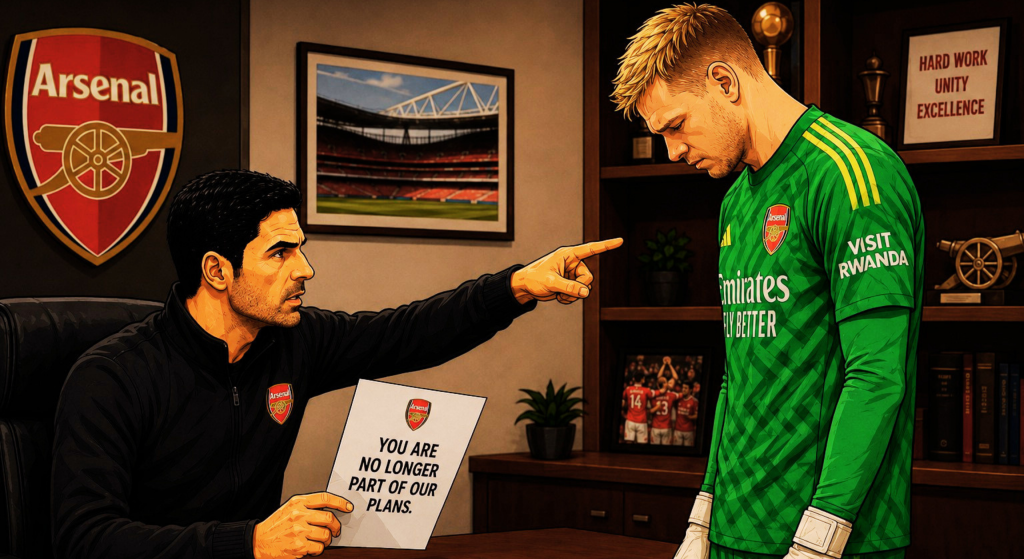
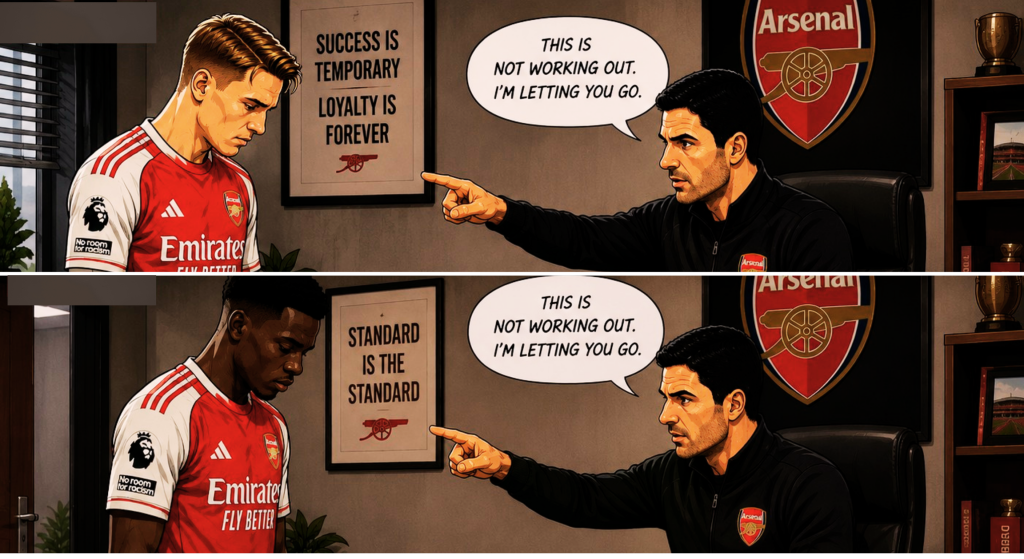
One of Arteta’s most controversial early moves was removing players who didn’t align with the culture he was building, regardless of their star power.
Mesut Özil, a world-class talent and one of Arsenal’s highest-paid players, was frozen out. Pierre-Emerick Aubameyang, a beloved captain and top scorer, was stripped of the armband and eventually released. At the time, many thought Arteta had lost his mind. The board backed their man.
He routed out key players who did not align with the company’s vision and culture. He removed the so-called “untouchables” and in doing so, sent an unmistakable signal to everyone watching: no one is above the culture.
But he didn’t stop there. He then assembled a support team to help identify and bring in the right talent, trusting former Arsenal players like Edu Gaspar with the recruitment mandate. Edu, a former Gunner who understood the club’s DNA deeply, became a critical architect of the rebuild.
The Lesson for Leaders:
Culture is not just about what you build. It is equally about what you remove. High performers who undermine culture are often more dangerous than low performers who embrace it. And when you recruit, use your best ambassadors. Former employees who carry institutional love and deep knowledge of what your organisation stands for are often your most powerful recruiters. They don’t just fill roles. They protect values.
Lesson 4: Quick Wins Buy Time for the Big Vision.
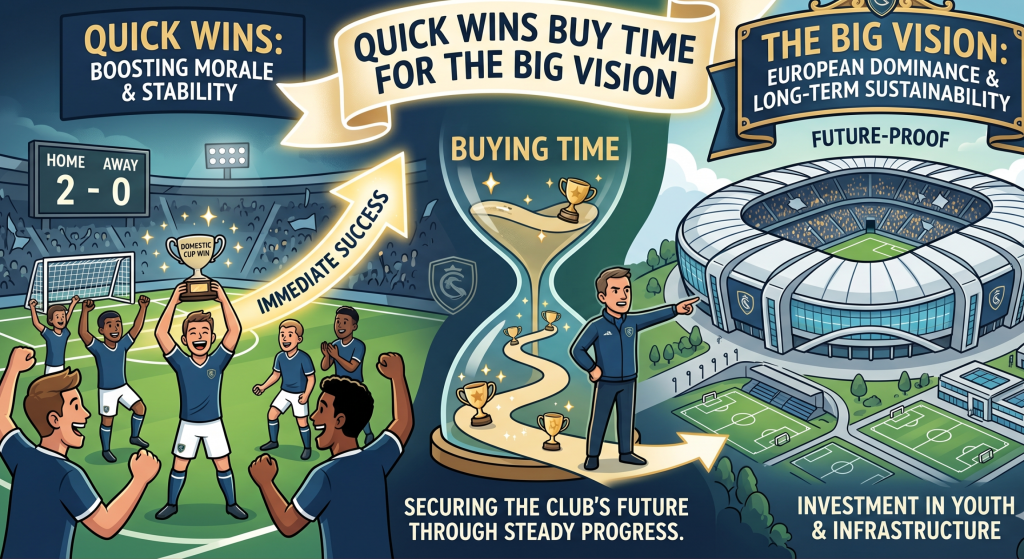
In recruitment and organisational transformation, you rarely get the perfect team immediately. You get bits and pieces that put you on your journey toward achieving your bigger goals.
In his first few years, Arteta delivered quick wins, most notably the FA Cup in 2020, Arsenal’s first trophy in nine years. That victory bought him something priceless: time and credibility to continue working on the bigger vision.
Over six years, he stacked incremental wins. An FA Cup. A Community Shield. A return to the Champions League. Each one building belief, sustaining stakeholder confidence, and keeping the long-term project alive.
The Lesson for Leaders:
As a new leader, identify your low-hanging fruit. The quick, visible wins that buy you time and trust while you work on the deeper transformation. Don’t become so consumed by the long game that you neglect the short-term moments that keep your board, your team, and your stakeholders invested in the journey.
Lesson 5: The Vision Becomes Clearer Step by Step.
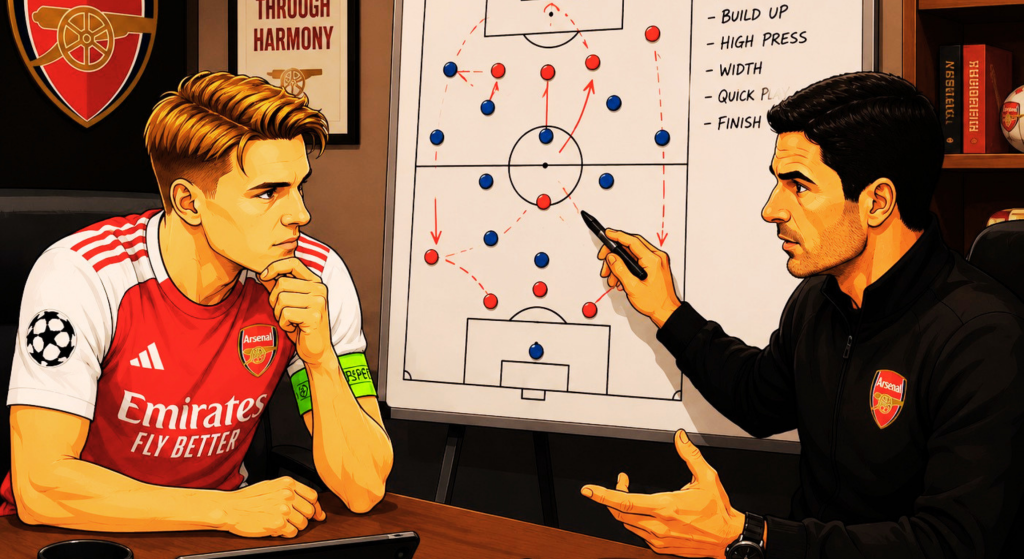
Step by step, the vision became sharper. Arteta helped everyone in the organisation operate from the same page, from the first-team players and coaching staff to the academy, the recruitment team, and the board.
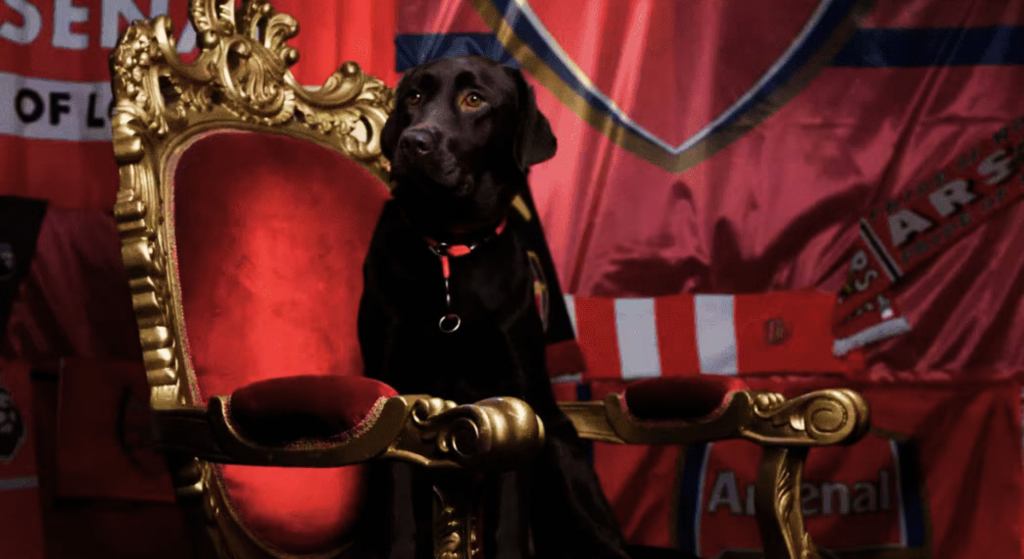
He assembled a team in an environment built to prosper. He went out and did everything to motivate his players, including, famously, buying a dog for the team and naming him “Win.” You truly cannot make this up. These seemingly small gestures created a culture of optimism and a collective belief that they could be champions. He celebrated small wins while keeping the focus firmly on the bigger prize.
The results over six seasons tell the story:
2020: FA Cup ✓
2023: Champions League return ✓
2024: Runners-up in the Premier League ✓
2025: Runners-up again, heartbreaking but belief growing ✓
2026: Premier League Champions ✓
Arsenal topped the table for all but one week from October until the final whistle of the season. They recorded the best defensive record in the league, kept clean sheets in half their matches, and finished with 27 wins and 7 draws from 38 games.
The Lesson for Leaders:
Long-term transformation is not linear. There will be near-misses and heartbreaks along the way. But each step, when aligned with a clear vision and consistent culture, compounds. Arteta said after clinching the title: “I looked at the players in the dressing room after a painful loss and I wanted to see their reactions before I said anything. I could tell they were very hurt but they realised we can beat them and we can be better than them.” That is the moment a leader knows the culture has taken root.

Lesson 6: Myles Lewis-Skelly and the Right Way to Develop Young Talent.
Perhaps no story from Arsenal’s title season captures the club’s organisational maturity better than that of Myles Lewis-Skelly.
At just 18 years old, Lewis-Skelly, an Arsenal academy product since the age of eight, made 39 appearances across all competitions this season, became a Premier League regular, earned his first England senior caps, and broke the record for the youngest player to score on an England debut.
But what makes his story remarkable from a leadership perspective is how he was developed. He wasn’t thrown into the deep end and left to sink or swim. He was introduced gradually, supported structurally, and given the right environment to grow without being over-relied upon to the point of burnout.
The club’s investment in him goes beyond the pitch. Before signing his new long-term contract, Lewis-Skelly did something extraordinary. He presented to Arteta, academy manager Per Mertesacker, and the club’s leadership, sharing his values, his inspirations (including Kobe Bryant’s “mamba mentality”), and his vision for his long-term career at Arsenal. Those in attendance described it as a “unique experience” that generated “enormous pride” within the corridors of power. He wasn’t just signing a contract. He was articulating his place in the club’s succession story.
The Lesson for Leaders:
Identifying young talent is only the first step. The real leadership test is how you develop them. Too many organisations discover a promising young talent and immediately overload them with responsibility, extracting short-term value while neglecting long-term development. The result is burnout, resentment, and eventual departure. Arsenal’s approach, built on intentional exposure, structural support, a clear succession narrative, and room to grow, is the model every organisation should study.
Ask yourself: do your high-potential young talents have a seat at the table, or are they just carrying the table? Are they in your succession matrix, or simply your emergency resource?
Lesson 7: The Symbolism That Binds (Culture Is Felt, Not Announced).
The lighting of fires. The music in the dressing room. The tifos. The dog named Win. The fan anthem. These are not accidents. They are a deliberate architecture of belonging.
Arteta understood something that many leaders miss: culture lives in symbols, rituals, and shared experiences. It is not in the policy handbook. It is in the stories people tell each other. It is in the moments that make people feel that they are part of something bigger than themselves.
Many thought the symbolism was a joke. Many raised eyebrows at an AI-generated club anthem. But those elements went a long way in enabling Arteta to motivate the team and create a culture of optimism and belief, a belief that they can be champions. And now, they are.
The Lesson for Leaders:
Do not underestimate the power of intentional symbolism in your organisation. The rituals you create, the language you use, the stories you celebrate are the invisible architecture of your culture. Build them with purpose.
The Bottom Line.
Arsenal’s Premier League title, 22 years in the making, is not just a football triumph. It is a blueprint for organisational transformation.
It is a story about a board that made a bold, unconventional hire. A leader who earned buy-in before demanding change. A culture architect who was willing to remove stars in service of standards. A recruiter who trusted former players as the best ambassadors of institutional values. A developer who gave young talent room to grow without burning them out. And a visionary who understood that step by step, win by win, symbol by symbol, mountains can be moved.
As Arteta himself said upon being named Premier League Manager of the Season: the success was not built in a single season. It was the outcome of years of intentional rebuilding.
North London forever. And a lesson for all of us.
What lessons from Arsenal’s journey resonate most with your leadership experience? I would love to hear your thoughts in the comments.
#Leadership #OrganisationalCulture #Recruitment #Arsenal #PremierLeague #Transformation #TalentDevelopment #ExecutiveLeadership #ChangeManagement
The Bottom Line.
Arsenal’s Premier League title, 22 years in the making, is not just a football triumph. It is a blueprint for organisational transformation.
It is a story about a board that made a bold, unconventional hire. A leader who earned buy-in before demanding change. A culture architect who was willing to remove stars in service of standards. A recruiter who trusted former players as the best ambassadors of institutional values. A developer who gave young talent room to grow without burning them out. And a visionary who understood that step by step, win by win, symbol by symbol, mountains can be moved.
As Arteta himself said upon being named Premier League Manager of the Season: the success was not built in a single season. It was the outcome of years of intentional rebuilding.
North London forever. And a lesson for all of us.
What lessons from Arsenal’s journey resonate most with your leadership experience? I would love to hear your thoughts in the comments.
#Leadership #OrganisationalCulture #Recruitment #Arsenal #PremierLeague #Transformation #TalentDevelopment #ExecutiveLeadership #ChangeManagement